How It Works
Pitch Invasion is built around structured space, tactical identity, and twenty-nine qualities tested under pressure. Here's the full system.
Match Structure
A Pitch Invasion match runs in two 45-minute halves. Each half is broken into a series of possession sequences — one team controls the ball and attempts to advance through the pitch zones until a shot is taken or possession is lost.
The match engine handles progression, transitions, variance events, and goalkeeping automatically through the chart reference system.
The Pitch Grid
The match unfolds across an 16 × 5 grid. The long axis (16 columns) represents field length — from one goal to the other. The short axis (5 rows) represents width.
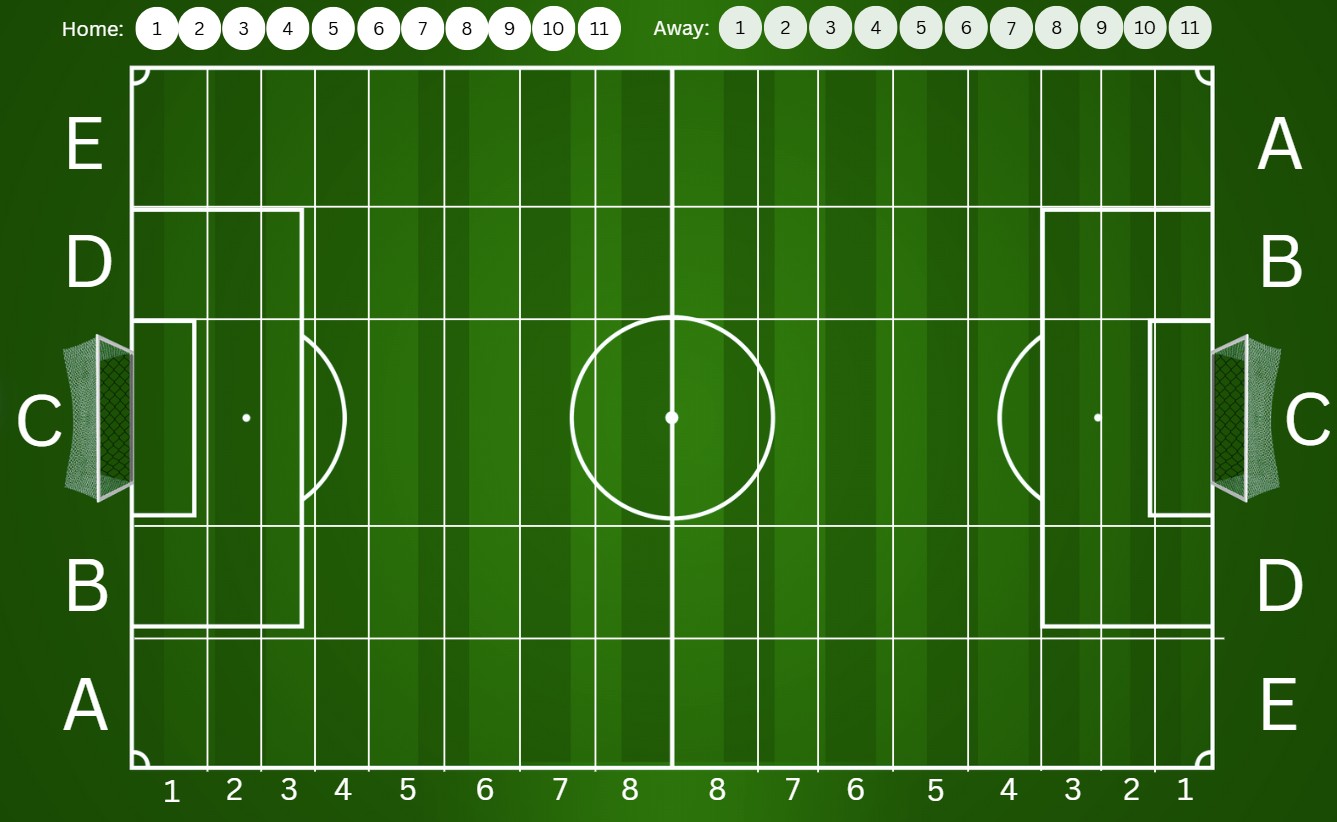
Three territorial bands define the match flow:
- Defensive third (cols 1–5): where teams build out, press opponents, and defend set-pieces
- Neutral midfield (cols 6–11): the contested zone — possession here demands passing precision and creativity
- Attacking third (cols 12–16): the most dangerous territory — box entry and scoring quality come to the fore
Defensive lines can sit high (compressing the neutral zone) or standard.
Duels & Resolution
Every matchup play in Pitch Invasion is resolved through a two-step process:
Winger attempts to enter the box. Box Entry: 24 vs defender's Defending: 19. Differential = +5 modifier.
Die roll: 18 + 5 = 23. Threshold: 20. ✓ Box Entry successful. Shot opportunity created.
Formations & Modifiers
Each formation applies flat +2 / −2 modifiers to specific qualities before any duel is resolved. This shapes which actions your team excels at — and which carry more risk.
Formation cards are included in the core game. Each shows the full modifier list and a tactical description.
Goalkeepers
Goalkeepers are rated independently across six qualities. When a shot occurs, the match engine determines the shot type — routine or highlight — and the relevant GK quality is tested against the attacking player's scoring quality.
Seasons & Long-form Play
Pitch Invasion is designed for sustained play. A single match tests quality. A full season tests structure, depth, and tactical identity.
- Home advantage — The home side gains a die modifier on key duels, reflecting crowd pressure and familiarity.
- Substitution impact — Stamina degrades in the second half. Substitute players enter with full energy and can shift the game's physical balance.
- Tactical identity — The formation you choose shapes not just individual matches but how your team accumulates results across a league table.
- Endurance — High-press formations drain stamina faster. Teams relying on work rate and pressing must manage their squad depth carefully.